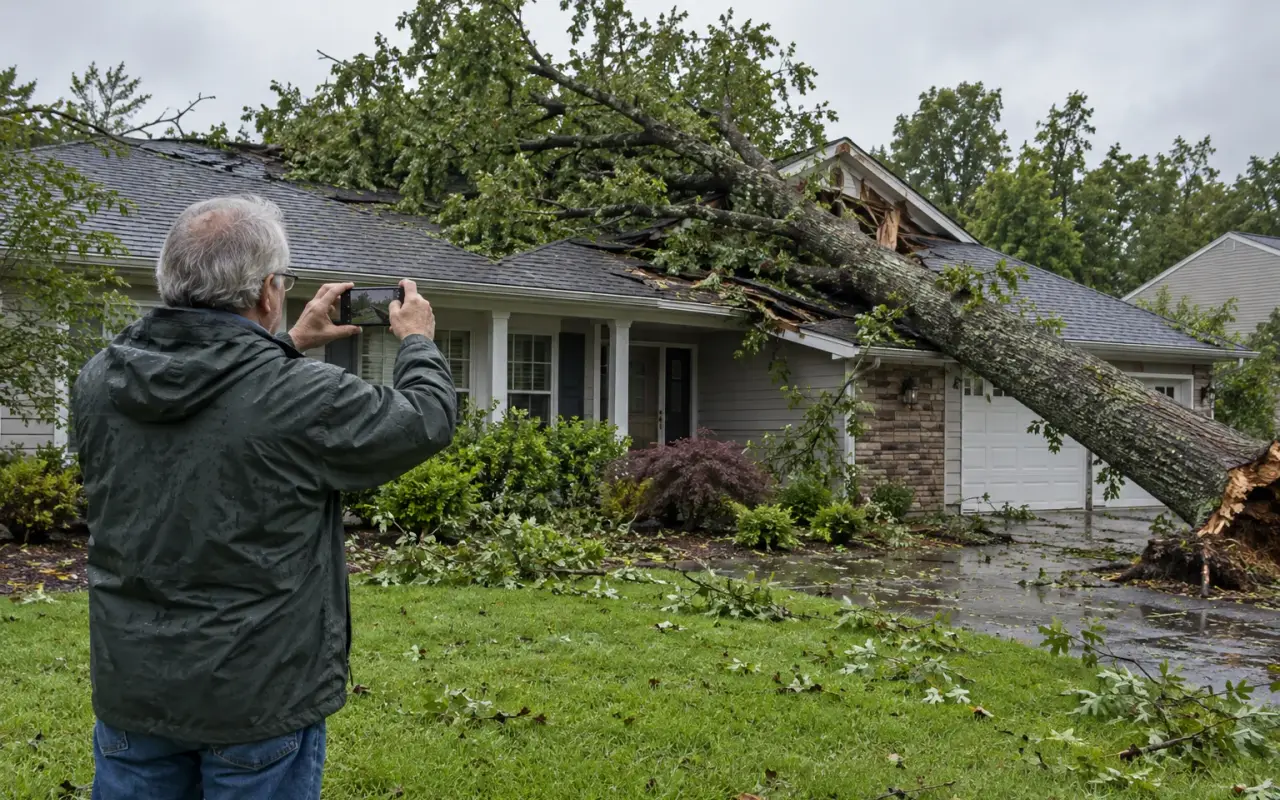
Policies differ, and the answer for your house is in your policy and your declarations page. What follows is how state regulators describe the usual case, so you know what to ask.
The house, a garage or a fence
When a tree damages a building, regulators describe coverage as the norm rather than the exception. The Texas Department of Insurance says many homeowners policies provide some coverage “if a tree falls in a storm and your house is damaged.” The Oklahoma Insurance Department describes a tree “causing damage to a structure such as the house, garage or fence,” and adds: “The cost to remove the tree or limb is also covered by the insurer.”
The yard
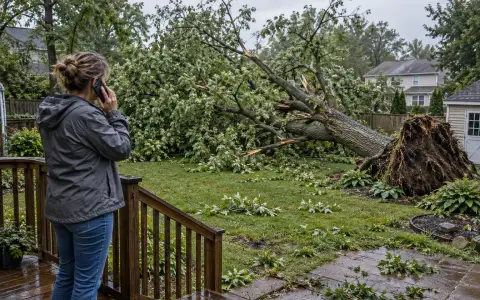
A tree that falls on open ground is usually a different story. The Texas department:
But limbs and trees falling in your yard usually aren’t covered.
Texas Department of Insurance
One exception appears in many policies: removal of a tree that blocks the driveway. The Texas department mentions limbs that “block your driveway,” and one insurer’s summary of its standard policy covers removal of a tree brought down by windstorm that blocks a driveway or a ramp for a person with a disability. A tree across the driveway
The car
If a tree falls on your car, your auto insurance will pay for damage if you have comprehensive coverage.
Texas Department of Insurance
A neighbor’s tree
The Texas department: “their homeowners policy probably won’t cover the damage and tree removal, unless your neighbor was at fault,” and if it does not pay, “you can file a claim under your own policy.” The Oklahoma department adds that a neighbor who was told a tree was a safety concern and did nothing “could be considered negligent.” A neighbor’s tree
The debris limit
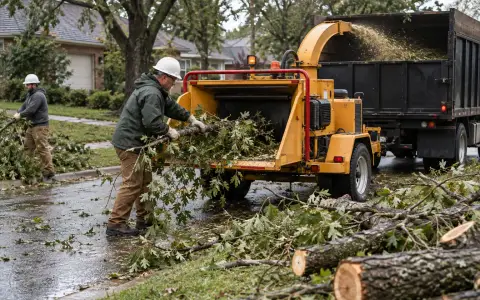
Many policies carry a separate, small limit for removing tree debris. One insurer’s summary gives $500 per tree and $1,000 per loss, however many trees came down. A tree-industry article in TCI Magazine puts typical residential debris-hauling limits at $500 to $1,000, and argues that taking a tree off the house is part of repairing the house, so that limit should not cap it. Ask your insurer which part of the policy pays for lifting the tree off and which for hauling it away, and whether the deductible applies to each.
In the right order
- People out from under the tree, and the utility called if any wire is involved.
- Photographs before anything moves. The Texas department: “Take photos of the damage before you move the tree, make repairs, or take other steps to prevent more damage.”
- The insurer or agent, and a claim number.
- Temporary protection, such as a tarp, with receipts kept.
- Removal, ideally after the adjuster has seen it or with the insurer’s agreement.
If you disagree with how a claim was handled, each state page on this site names the state’s insurance regulator. By state
Updated 2026-10-11.
 Tree removal
 Trimming and pruning
 Lot and land clearing
 Tree health check
 Cabling and bracing
 Brush and debris cleanup
 What it costs
 Permits
 Hiring a tree service