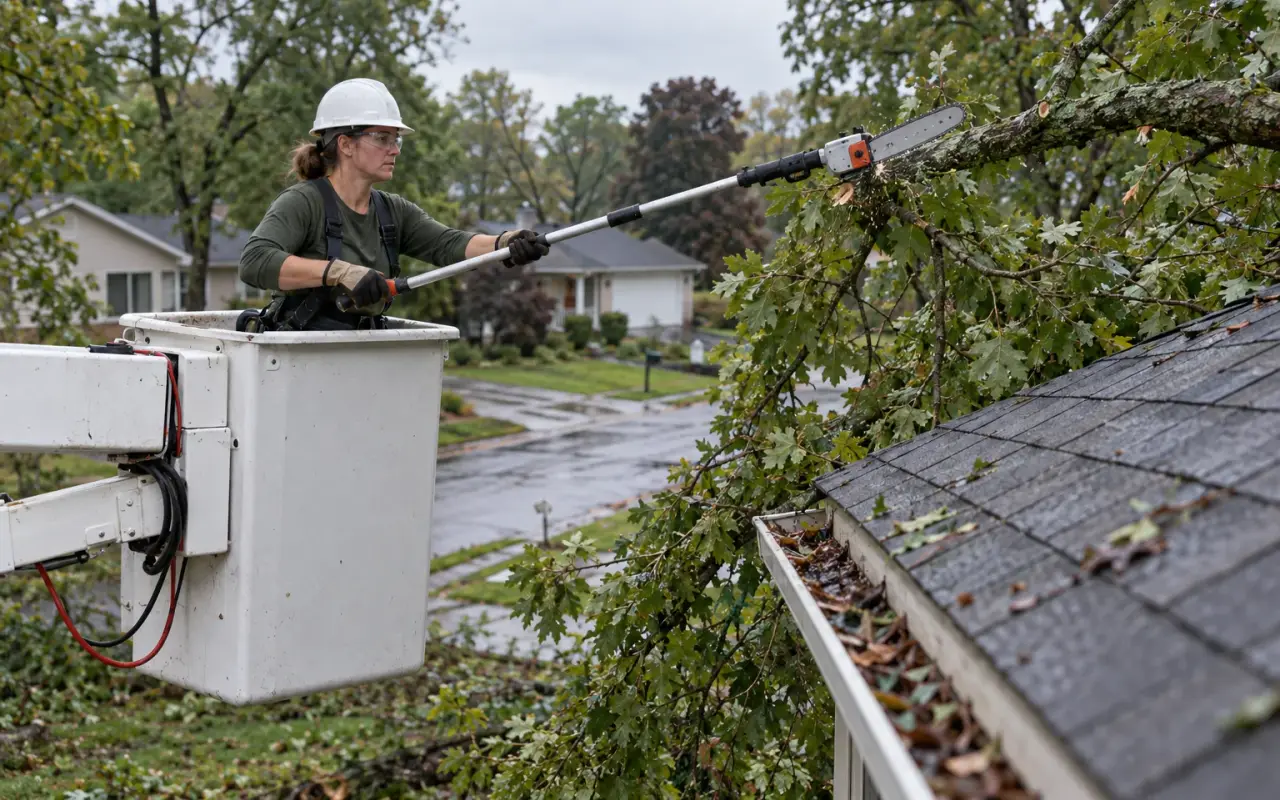
Why trees are pruned
The International Society of Arboriculture gives the reasons in one sentence: pruning is done “to remove dead, diseased, or insect-infested branches and to improve tree structure, enhance vitality, or reduce risk.” Its list of what arborists remove includes limbs that “interfere with utilities or structures,” that “obstruct streets or sidewalks,” and that are “dead, damaged by storms, weak, or decayed, and pose unacceptable risk.”
The same guidance carries a warning worth repeating to any crew: “The removal of live branches creates a lasting wound; therefore, no branch should be removed without a reason.”
Never ask for topping
Topping means cutting the top of a tree back to stubs to make it shorter. It is usually requested by owners who worry a tall tree will fall on the house, and it does the opposite of what they want. The ISA calls it “perhaps the most harmful tree pruning practice known”:
Topping is often used to reduce the size of a tree. Homeowners may feel a large tree poses a risk to their property; however, topping is not a viable method of height reduction, and may increase risk in the long term.
International Society of Arboriculture, Why Topping Hurts Trees
The reason is what grows back. The shoots that sprout below each cut “are anchored only in the outermost layers of the parent branches and are weakly attached,” grow fast, and are “prone to breaking, especially during windy or icy conditions.” Topping also strips leaves the tree needs, exposes bark to sunburn and leaves wounds that decay. A crew that offers to top a tree is a reason to call a different crew.
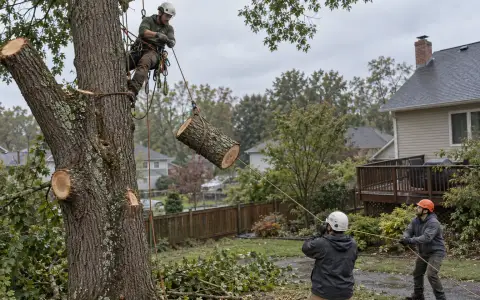
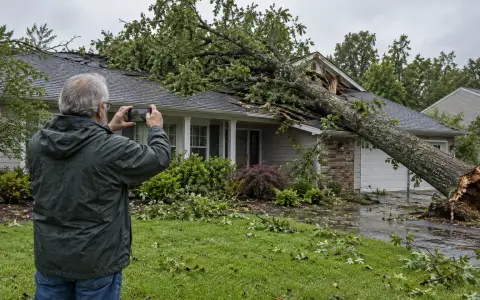
If a tree is too big for where it stands, the choices are pruning that reduces specific limbs back to suitable side branches, or removal. Tree removal
Near power lines
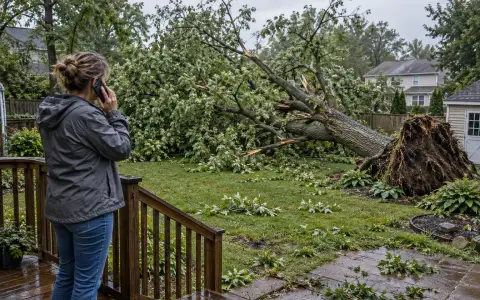
Branches near the lines that run along the street are usually the electric utility’s to prune, on its own schedule. The ISA notes that most utilities systematically prune vegetation away from uninsulated lines, while many do not try to prevent contact with insulated household lines and communication lines. Anything within reach of a line is work for the utility or a line-clearance crew, never a homeowner. A tree on a power line
What to settle before work starts
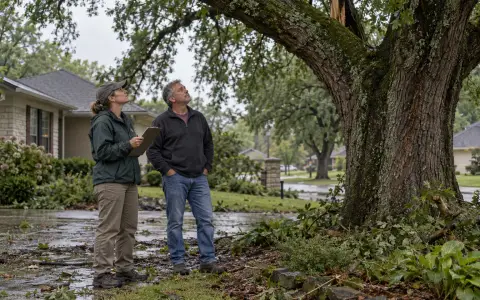
- Which limbs come off, and why. A written list or marked photos avoid surprises.
- That cuts are made at the branch collar, not flush with the trunk and not leaving stubs. The ISA describes correct cuts as made “just beyond the branch collar.”
- Whether chips and wood are hauled away or left.
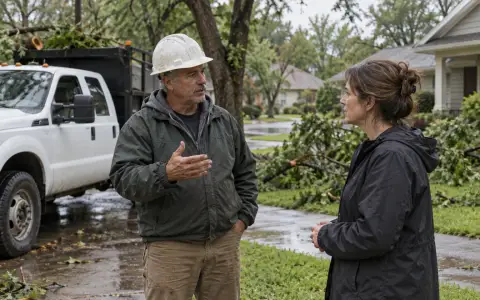
- Proof of insurance. Pruning large trees, the ISA notes, “requires special equipment, training, and experience.” Hiring a tree service
Updated 2026-10-11.
 Tree removal
 Lot and land clearing
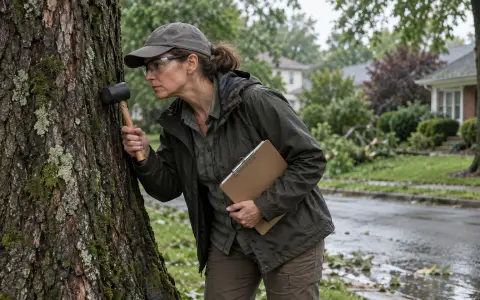 Tree health check
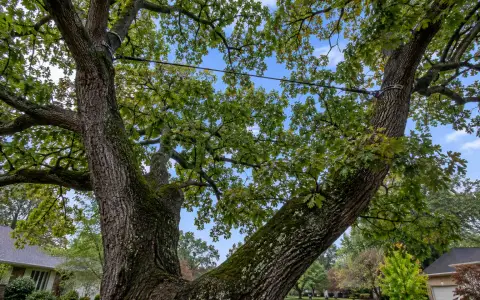 Cabling and bracing
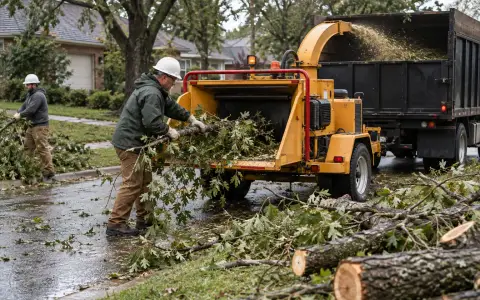 Brush and debris cleanup
 What it costs
 Insurance
 Permits
 Hiring a tree service