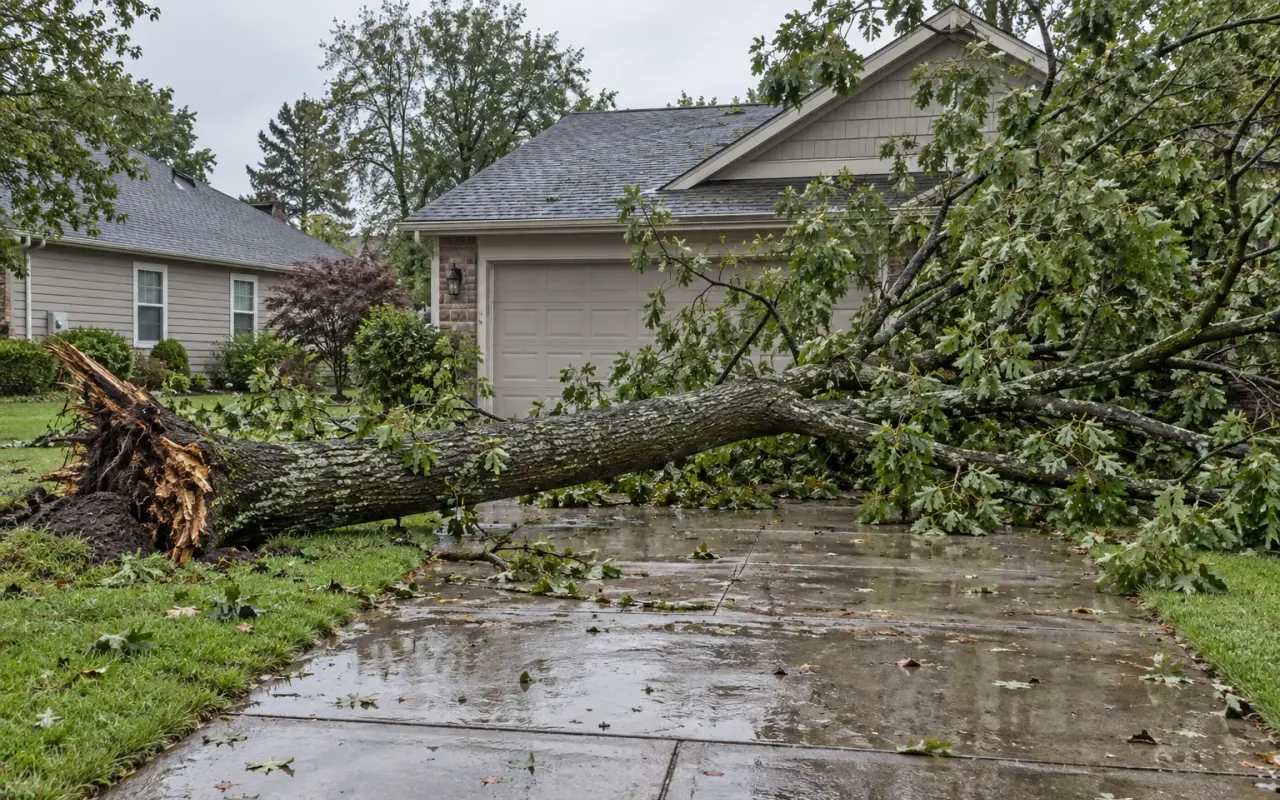
On the street, call the city first
A tree lying across a public street is usually the city’s or the county’s to clear, whoever’s yard it fell from. Call the public works or streets number, or the non-emergency police line if you cannot find it, and say whether the road is fully blocked. If a wire came down with the tree, the electric utility comes before anyone. A tree on a power line
In your driveway, check the policy
A blocked driveway is one of the few cases where a homeowners policy may pay for removal even when nothing was damaged. The Texas Department of Insurance says many policies provide some coverage when a tree falls in a storm and damages the house, or when “limbs block your driveway,” while “limbs and trees falling in your yard usually aren’t covered.”
One insurer’s summary of its standard policy shows how this is usually written. Removal is covered when a tree brought down by windstorm damages a covered structure, or blocks a driveway or a ramp for a person with a disability, with a limit of $500 per tree and $1,000 per loss however many trees fell. Your policy may use different limits, and the deductible may apply, so ask the insurer before you decide who pays.
Photograph the tree across the driveway, including where it broke or where the roots came up, before anyone cuts it.
Do not cut it out yourself
It is tempting to cut a path with a chainsaw. A trunk across a driveway often rests on its branches and its root plate with the middle bent under load, and the International Society of Arboriculture’s storm brochure says that “trees and limbs under tension may react unexpectedly when cut or moved.” The same brochure lists working with tree-cutting machinery and debris cleanup among the work that “should be carried out by a professional arborist.”
What removal involves
The crew usually opens the driveway first, cutting the trunk into lengths that can be rolled or lifted aside, and then deals with the stump or root plate and the brush. Say on the call whether you need the driveway open urgently, for a car or for someone who needs care. After a storm
Updated 2026-10-11.
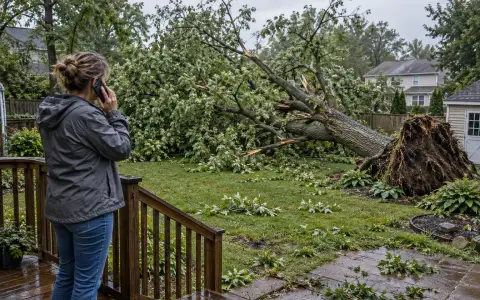
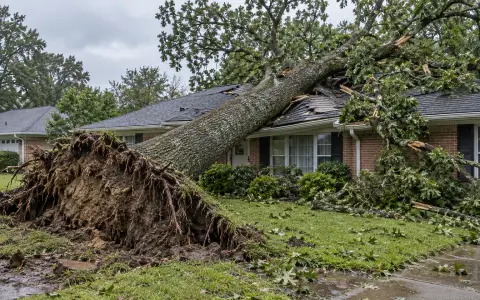 On the house or roof
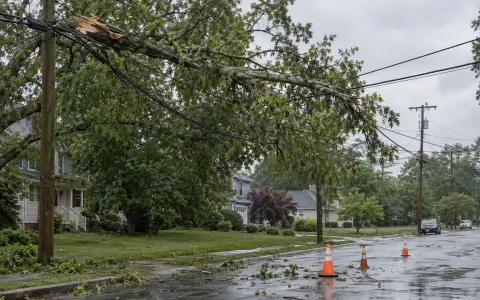 On a power line
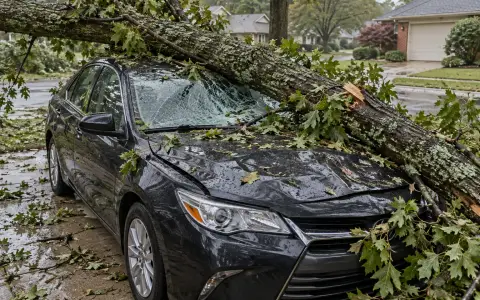 On a car
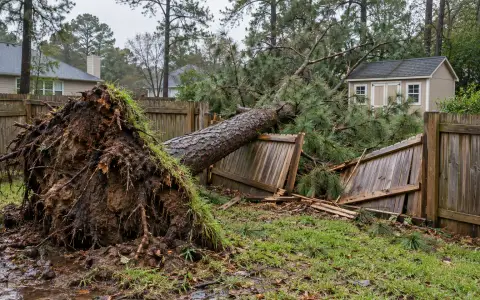 On a fence or shed
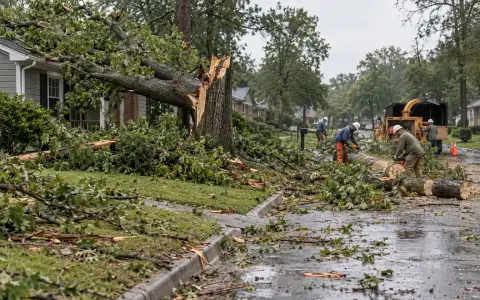 After a storm
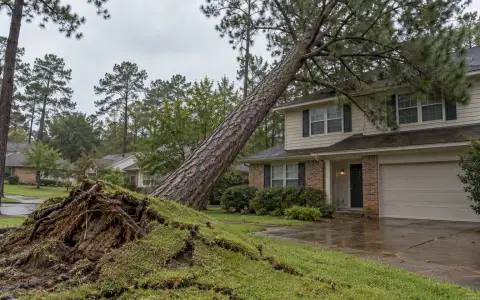 Leaning
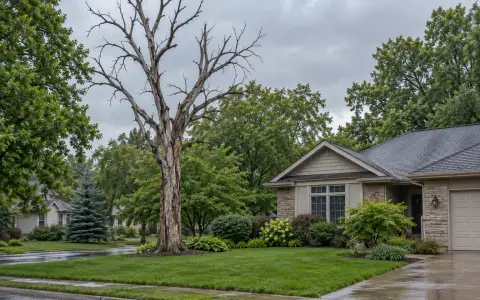 Dead or dying
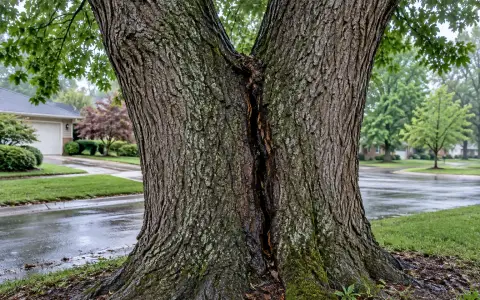 Split or cracked trunk
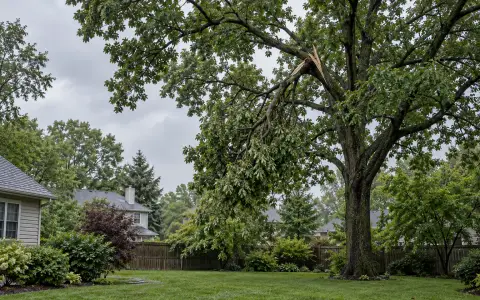 Hanging broken limb
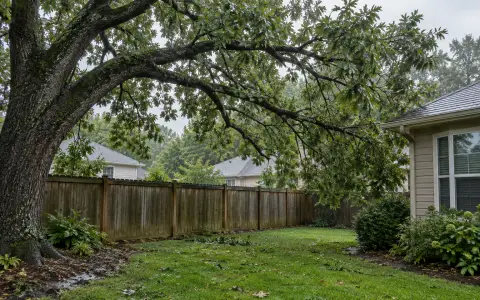 A neighbor’s tree