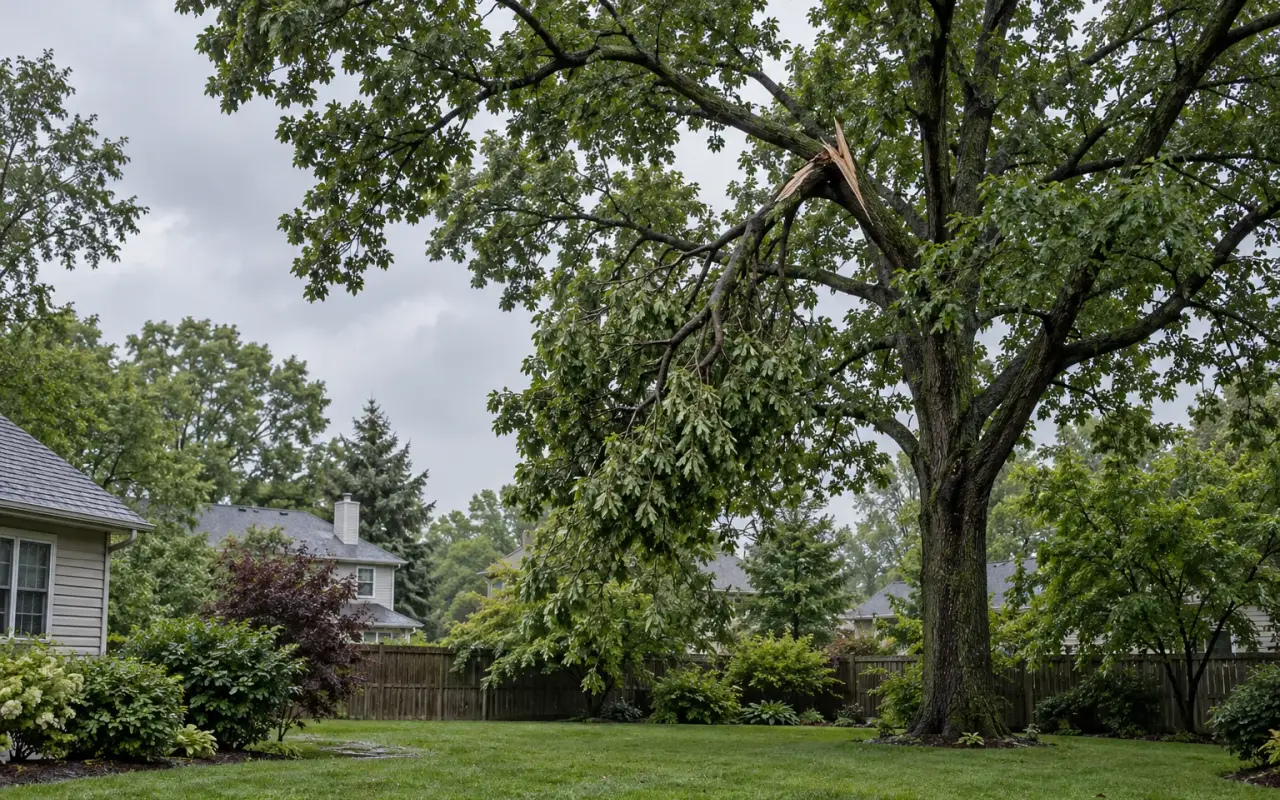
Why it is dangerous
A broken limb caught in the branches below it is held by friction, a twist of bark or another branch bending under its weight. Wind, rain or a squirrel can be enough to move it. The International Society of Arboriculture’s first warning after a storm is about exactly this:
Broken limbs hanging overhead or uprooted trees fallen and resting in other trees, on roofs or other built structures may continue to move during and after the storm has passed.
International Society of Arboriculture, Storm-Related Tree Damage
Its checklist for tree risk asks the same question of any tree, storm or not: “Are there detached, hanging branches?”
What to do now
- Keep people, pets and cars out of the area it could land in, and remember that a falling limb can bounce or slide off a roof.
- Do not pull on it with a rope, shake the tree or try to knock it down.
- If it is tangled in wires, or rests against a line, the electric utility comes first. A tree on a power line
How a crew brings it down
A climber or a bucket truck reaches the limb, secures it with a rope and cuts it free in pieces, lowering each one rather than letting it drop. That control is the reason for the crew. OSHA’s quick card for tree work reminds crews: “Inspect tree limbs for strength and stability before climbing.” A tree that just shed one limb may have others that are cracked.
Ask the crew to look over the rest of the crown while they are up there. After a storm
Updated 2026-10-11.
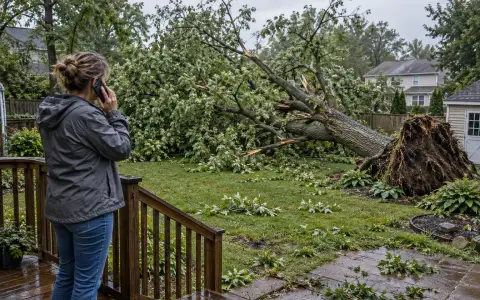
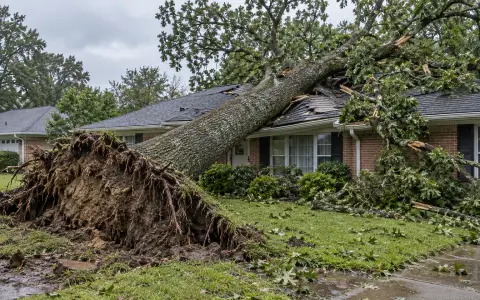 On the house or roof
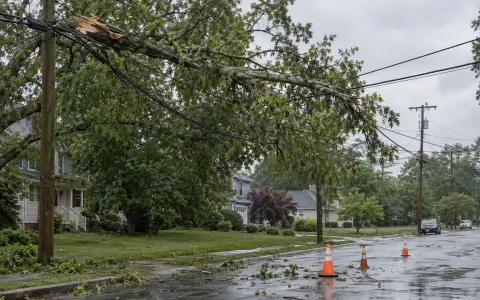 On a power line
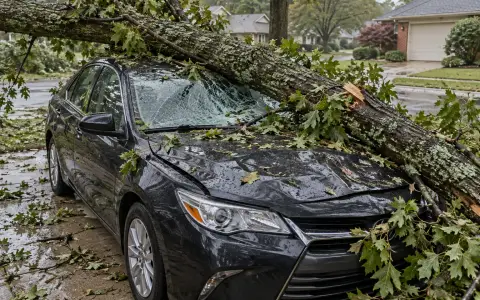 On a car
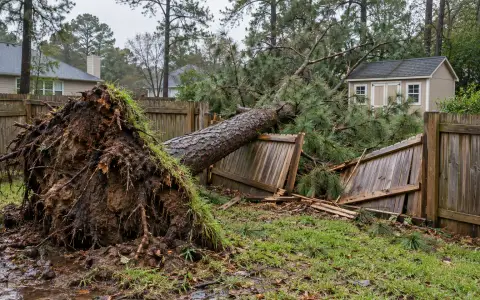 On a fence or shed
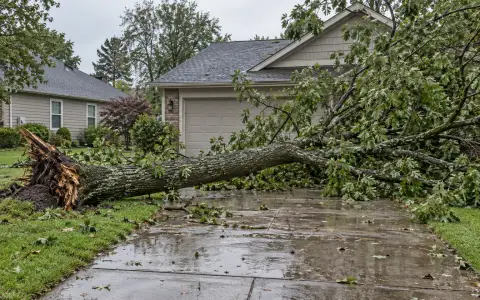 Across the driveway or road
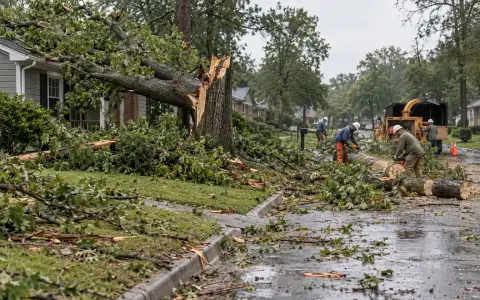 After a storm
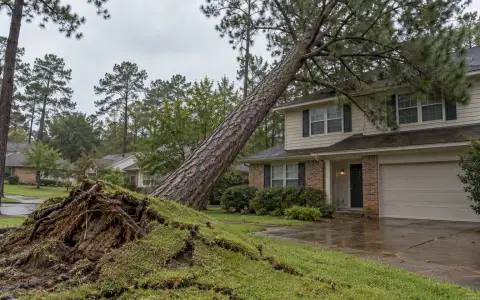 Leaning
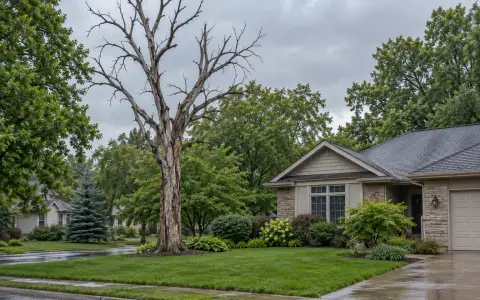 Dead or dying
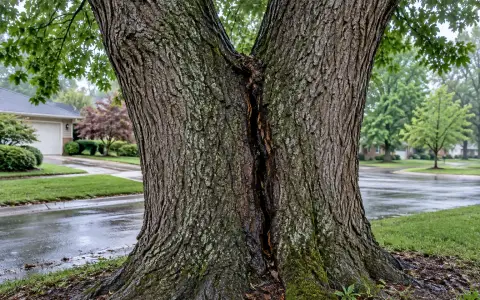 Split or cracked trunk
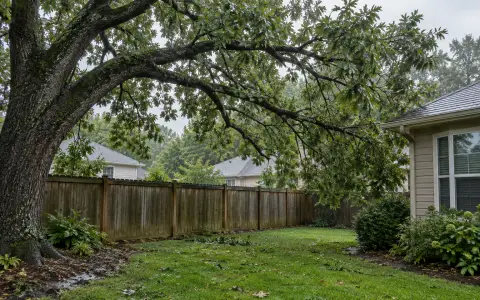 A neighbor’s tree