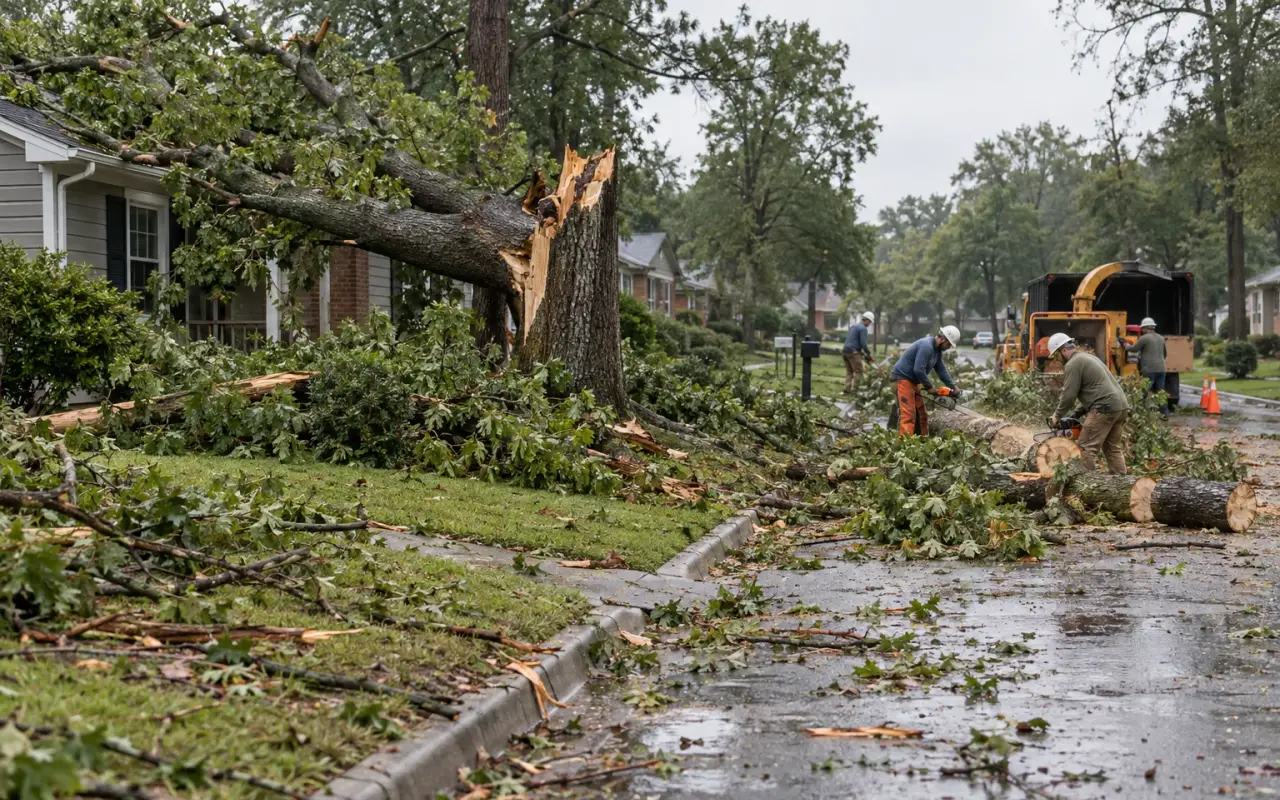
What storms do to trees
The International Society of Arboriculture lists three ways storms bring trees down: strong winds that break branches “and even uproot trees, particularly when combined with the softening of soils from heavy rain or snow storms”; snow or ice loads that break branches under the added weight; and lightning, which “generates heat that vaporizes water within the tree, causing wood to rupture and bark to dislodge.”
The National Weather Service records those storms county by county. Every county page on this site gives the count of thunderstorm wind reports from 2016 through 2025 and how many of them mention trees.
1. Safety first
The ISA brochure lists the hazards to weigh before anyone goes near the trees:
Broken limbs hanging overhead or uprooted trees fallen and resting in other trees, on roofs or other built structures may continue to move during and after the storm has passed.
International Society of Arboriculture, Storm-Related Tree Damage
It adds that limbs under tension “may react unexpectedly when cut or moved,” and that damaged trees may touch electrical wires “which have the potential to cause injury or death from electrocution.” Its advice: “When possible, stay clear of the area around damaged trees and call the local emergency services, utility company, or an arborist.”
2. Look at the trees that seem fine
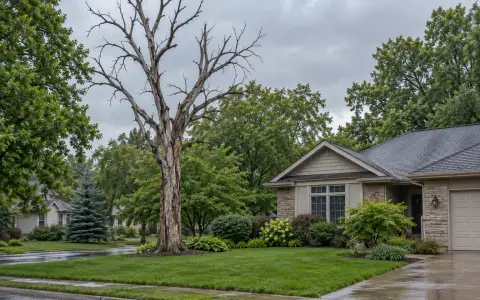
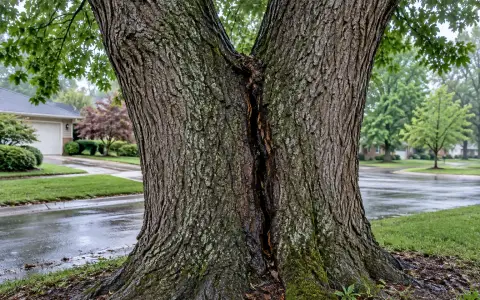
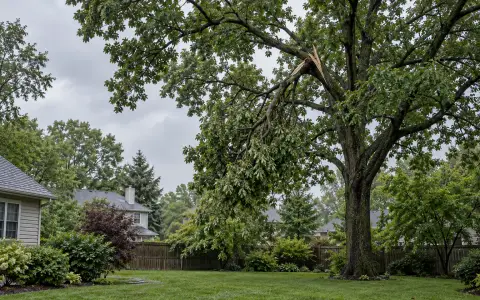
A storm also damages trees that are still standing. The brochure says assessments “should also take into account trees seemingly not damaged by the storm, particularly any larger trees near to locations of people or property,” and that an arborist should check them “for cracks in trunks or limbs, hanging branches, or soil heaving.” A leaning tree · Broken limbs still in the tree
3. Resist doing it yourself
Cleanup is where people get hurt. The ISA names working at height, retrieving tree parts from buildings or utility lines, and running cutting equipment, and concludes:
These and other such tree work operations—especially debris cleanup—are inherently dangerous and should be carried out by a professional arborist.
International Society of Arboriculture, Storm-Related Tree Damage
4. Hire carefully
After a big storm, crews arrive from out of town and some go door to door. The ISA’s advice for choosing a tree service includes: “Be wary of people who go door to door and offer bargains,” “Ask for proof of insurance and call the insurance company,” and “Get it in writing.” In Louisiana, paid work on trees requires an arborist license from the state Department of Agriculture and Forestry, and the department publishes the list of licensed arborists. Hiring a tree service
5. Call your insurer
Photograph the damage before anything is moved and report it. What a policy pays depends on what the tree hit. Insurance and fallen trees
Updated 2026-10-11.
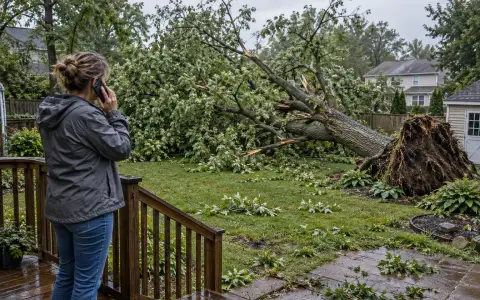
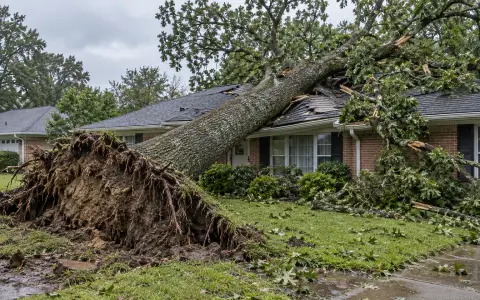 On the house or roof
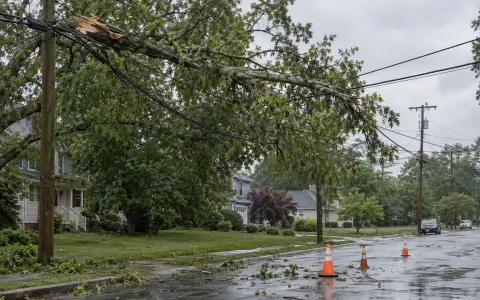 On a power line
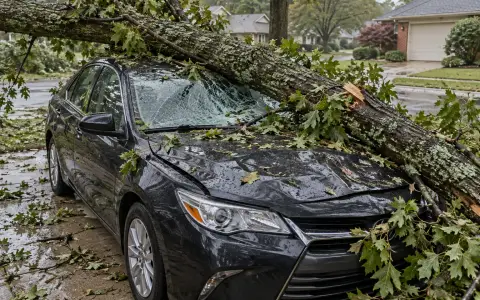 On a car
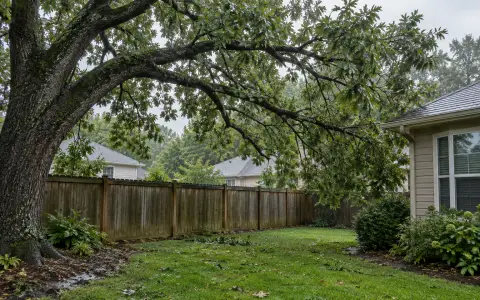
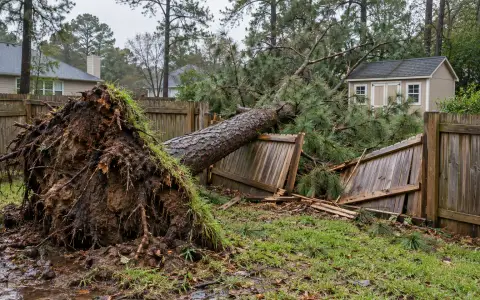 On a fence or shed
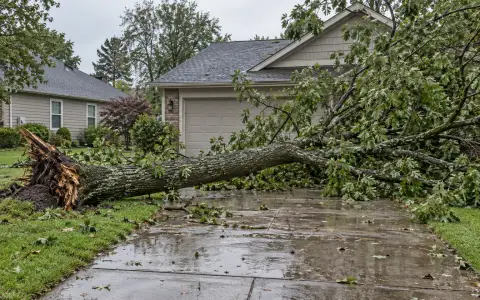 Across the driveway or road
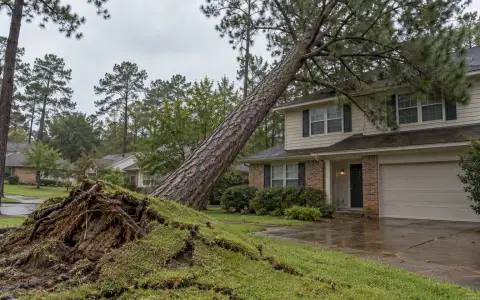 Leaning
 Dead or dying
 Split or cracked trunk
 Hanging broken limb
 A neighbor’s tree