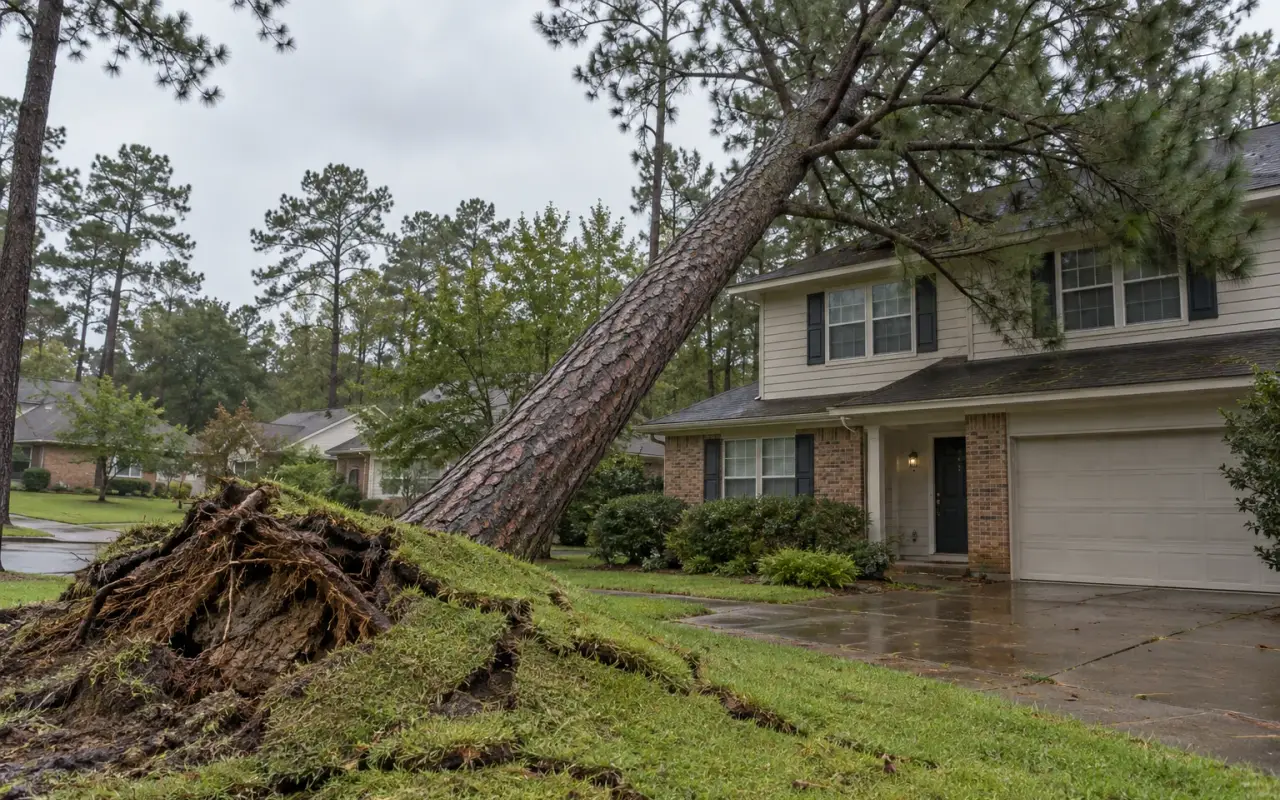
A lean alone is not the warning
Plenty of trees grow at an angle for decades and never fall. What arborists look for is a sign that the roots are moving. The International Society of Arboriculture describes root failure this way:
Cracks or separations in the soil may indicate soil heaving from excessive movement of the roots. This can be a warning sign for failure, especially if the tree is leaning.
International Society of Arboriculture, Recognizing Tree Risk
Look at the ground on the side away from the lean, from a safe distance. A crack in the lawn, a ridge of lifted soil or roots pulling up out of the ground means the root plate is being levered out.
Why a new lean matters most
A lean that was not there last week, after a storm or days of rain, means something moved. The ISA storm brochure notes that wind uproots trees “particularly when combined with the softening of soils from heavy rain or snow storms,” and asks arborists to check standing trees for “soil heaving.” Treat a new lean toward the house, a car park or a play area as urgent, and keep people out of the fall zone until someone has looked.
Other things that make it worse
The ISA checklist for tree risk includes questions any owner can answer from the ground:
- Are there cracks or splits in the trunk or where branches are attached?
- Are there cavities or rotten wood along the trunk or in major branches?
- Are mushrooms present at the base of or under the tree?
- Has the area recently been altered by construction, changes in soil level, or installations of lawns or pavement?
A yes to any of these on a leaning tree is a reason for an assessment. A tree health check
The options
An arborist can judge whether the tree can stay with pruning to reduce weight on the leaning side, needs support, or should come down. If it should come down and it leans toward the house, it is usually taken apart from the top rather than felled, because the direction it would fall on its own is the wrong one. In Florida, an arborist’s written assessment that a tree poses an unacceptable risk also matters for permits: section 163.045 of the Florida Statutes bars cities and counties from requiring a permit to remove such a tree from a single-family lot. Permits
Updated 2026-10-11.
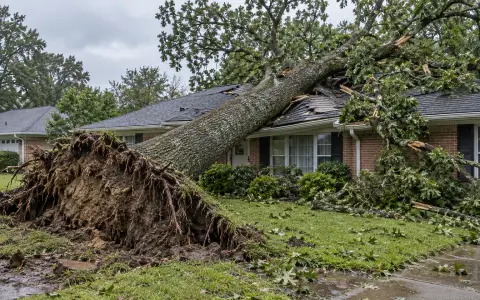 On the house or roof
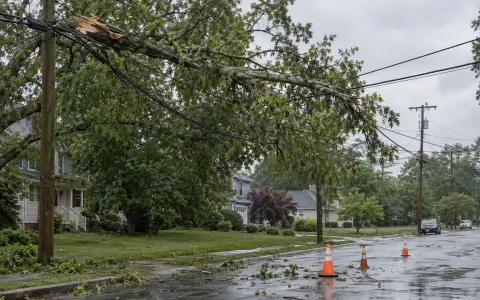 On a power line
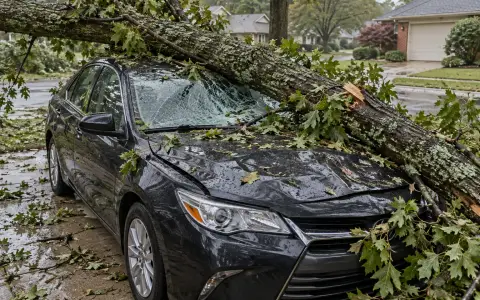 On a car
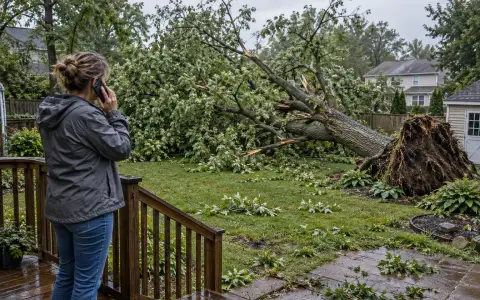
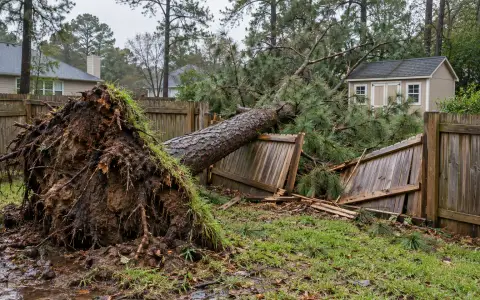 On a fence or shed
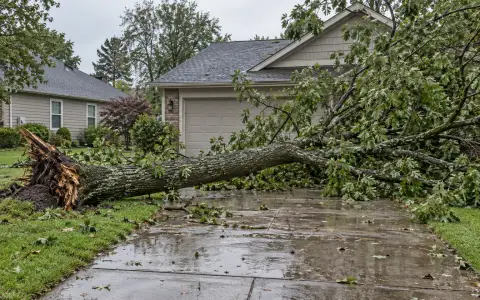 Across the driveway or road
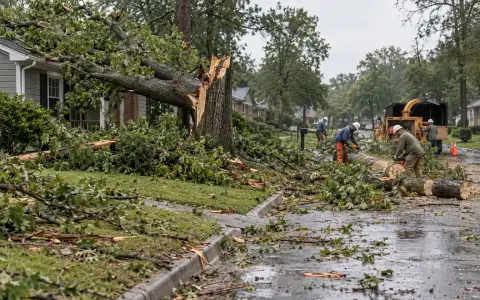 After a storm
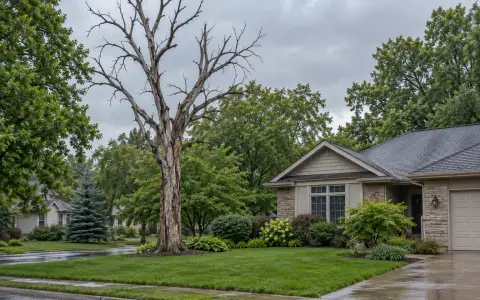 Dead or dying
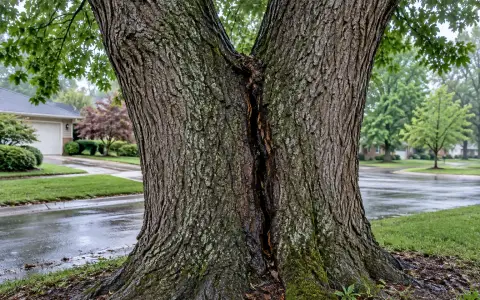 Split or cracked trunk
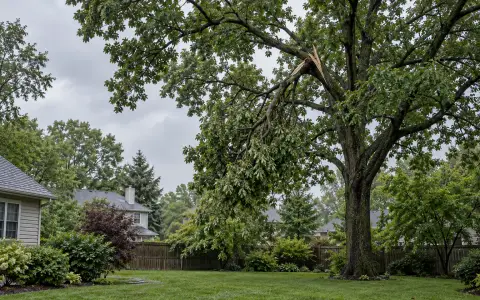 Hanging broken limb
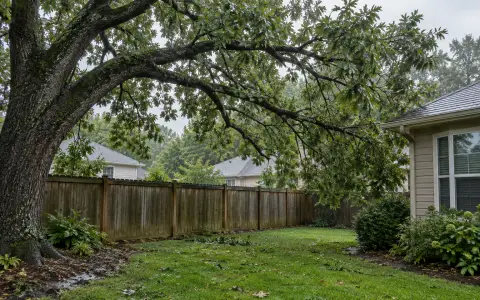 A neighbor’s tree