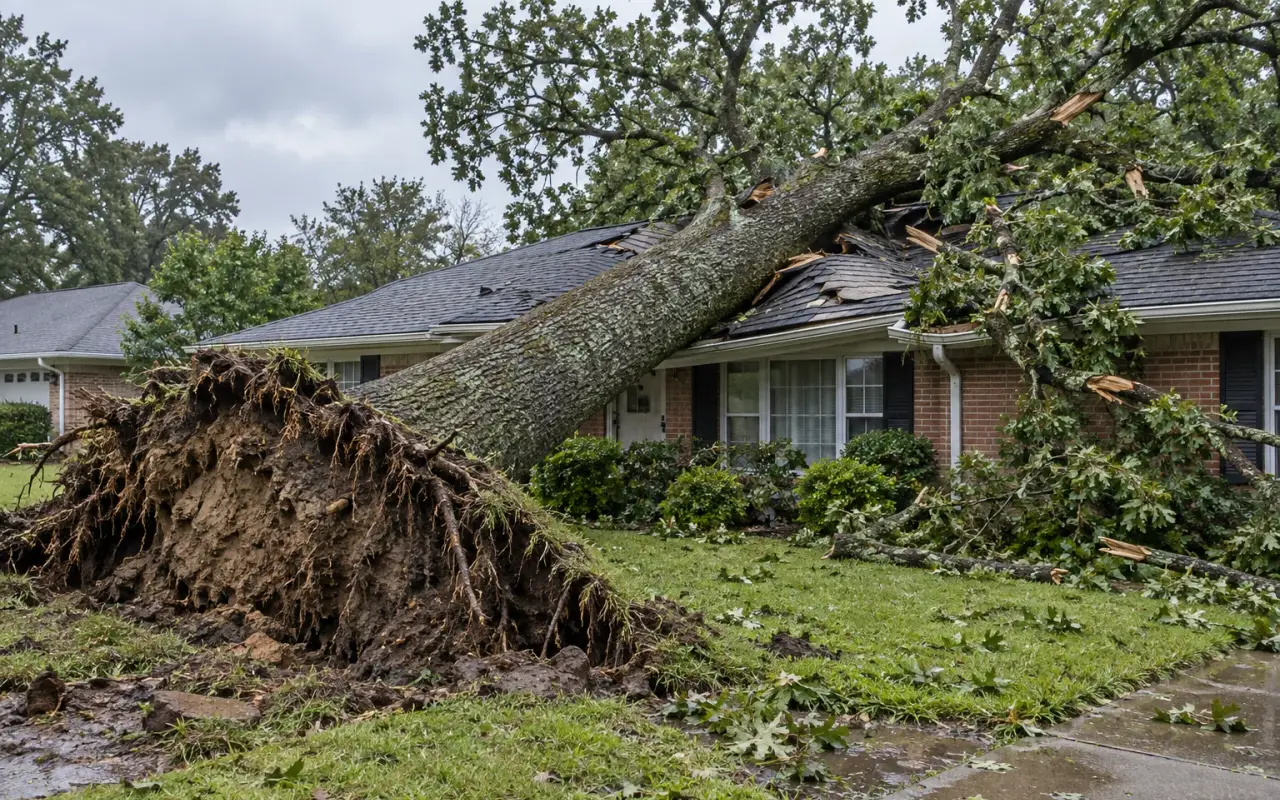
People first
Get everyone out of the rooms under the tree and keep them out. A tree resting on a house is rarely finished moving. The International Society of Arboriculture, the professional body for arborists, warns after storms:
Broken limbs hanging overhead or uprooted trees fallen and resting in other trees, on roofs or other built structures may continue to move during and after the storm has passed.
International Society of Arboriculture, Storm-Related Tree Damage
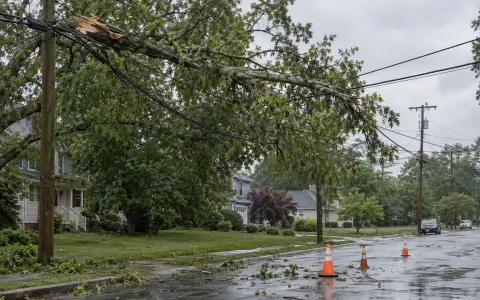
If a power line is down, touching the tree or pulled off the house, stay away from it and call the electric utility before anyone else. A tree on a power line
Do not climb onto the roof and do not start cutting. The same brochure explains why: “Trees and limbs under tension may react unexpectedly when cut or moved.” A trunk that is bent across a ridge can spring sideways when a cut releases it.
Photographs before anything moves
The Texas Department of Insurance gives the order plainly:
Take photos of the damage before you move the tree, make repairs, or take other steps to prevent more damage.
Texas Department of Insurance
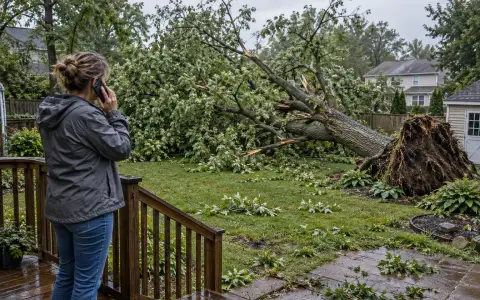
Photograph the tree from the ground on every side you can reach, the roof and gutters where it landed, and the rooms underneath, including ceilings and any water coming in. Then call your insurer or agent, keep receipts for anything you pay to stop further damage, such as a tarp, and write down the claim number.
Getting it off the house
A tree on a roof is taken apart, not pulled off. A crew works from the top down, cutting sections small enough to lower on ropes or lift away, so that nothing drops onto the roof a second time. A large trunk across a house may need a crane. That is why the job costs more than taking the same tree down standing: HomeGuide notes that when a tree “has fallen on a structure or power lines, emergency services and repairs can increase expenses.”
The tree crew removes the tree. Repairing the roof, the framing or the ceiling is a roofer’s or a contractor’s job afterwards, and the insurer usually wants to see the damage before it is repaired.
What insurance usually covers
Most of it depends on the policy, so read yours or ask your agent. Two statements from regulators and the trade help frame the call:
- Many homeowners policies provide some coverage “if a tree falls in a storm and your house is damaged,” according to the Texas Department of Insurance.
- If the tree was your neighbor’s, “their homeowners policy probably won’t cover the damage and tree removal, unless your neighbor was at fault,” and the claim goes to your own policy.
Policies often carry a small separate limit, commonly $500 to $1,000, for hauling tree debris away. A tree-industry writer argues in TCI Magazine that taking a tree off the house is part of repairing the house and is not capped by that debris limit. Ask your insurer which limit applies to lifting the tree off and which to hauling it away. Insurance and fallen trees
Before you call
Have the photographs, the insurer’s claim number if you have one, and a sense of how a truck could reach the house. The questions below are what the person on the phone needs to send the right crew.
Updated 2026-10-11.
 On a power line
 On a car
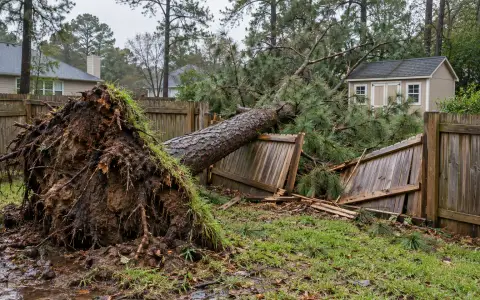 On a fence or shed
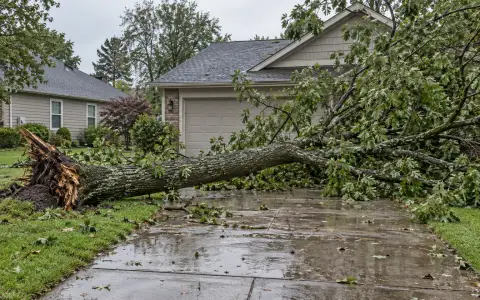 Across the driveway or road
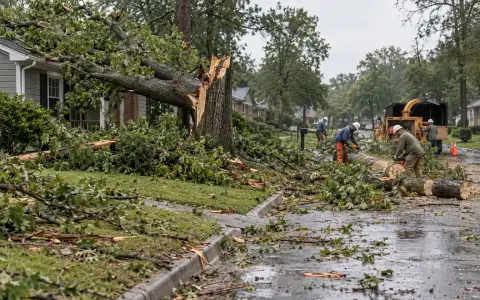 After a storm
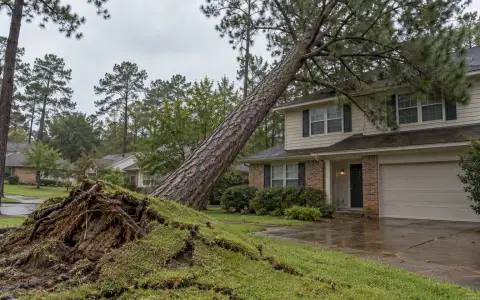 Leaning
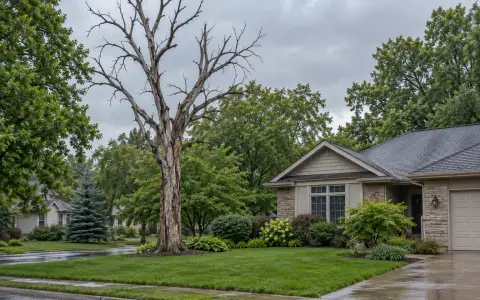 Dead or dying
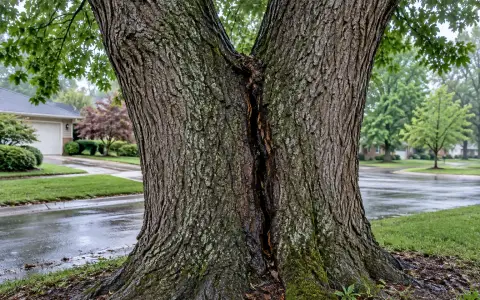 Split or cracked trunk
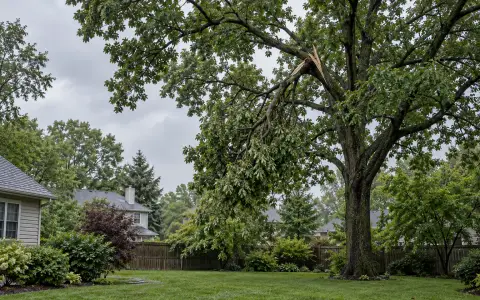 Hanging broken limb
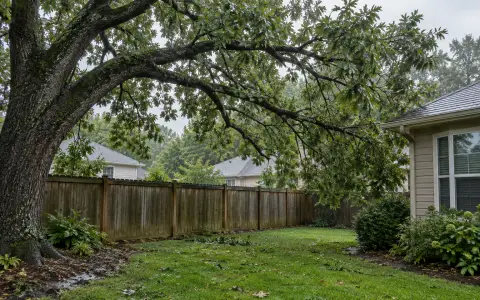 A neighbor’s tree