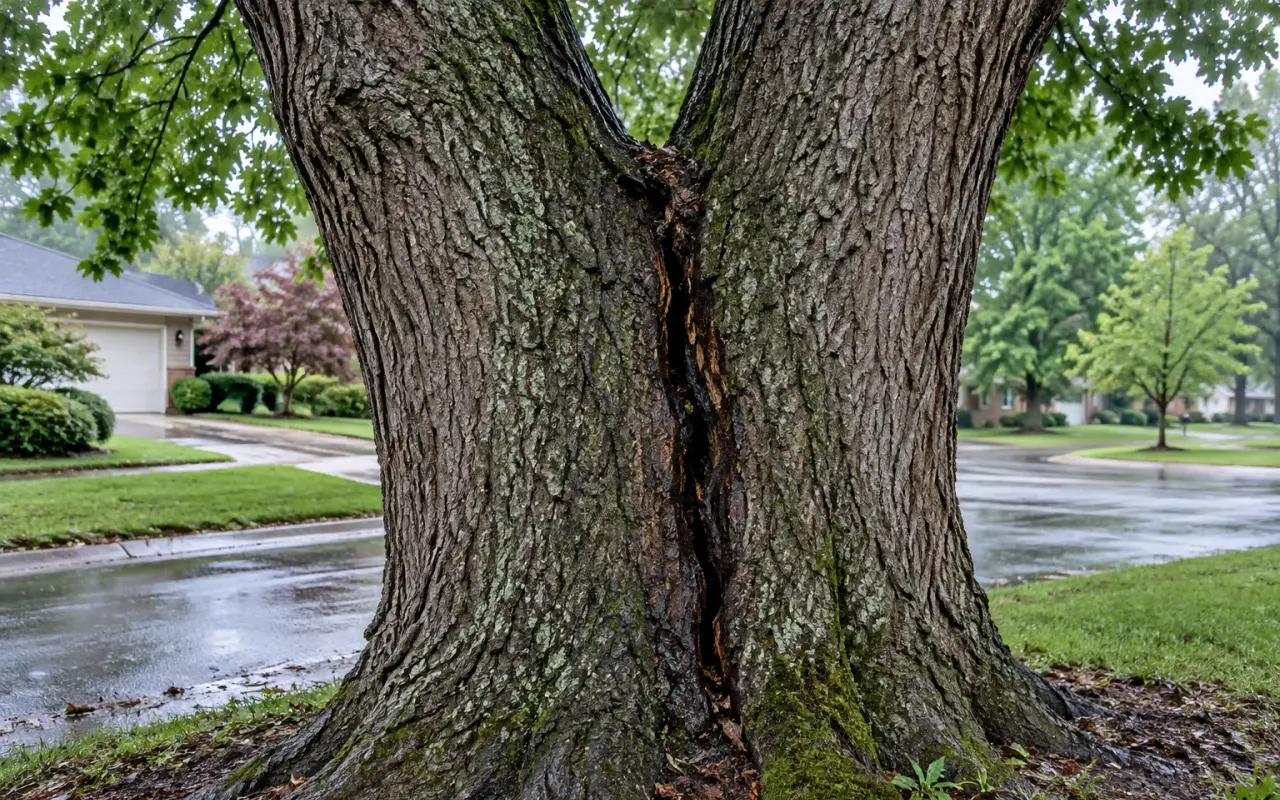
Two kinds of split
A fork into two stems of similar size. Arborists call these codominant stems. The International Society of Arboriculture lists them among the defects of urban trees: “Codominant stems (split trunk): Can often be failure points. Multiple branch attachments at one point on a stem can also be considered a defect.”
A crack. The same list says: “Watch for longitudinal cracks or splits on the trunk, major branches, or branch unions.” A crack that runs down from a fork, or a split that has appeared since the last storm, is exactly what that list asks owners to watch for.
What can be done
An arborist will look at how big each stem is, how deep the crack goes, whether there is decay, and what lies underneath. The usual options:
- Support. The ISA describes cabling and bracing as a way to “provide physical support for weak branches and stems to increase their strength and stability,” and adds in the same breath: “Such supports are not guarantees against failure.” Cabling and bracing
- Reduce weight. Pruning to lighten one or both stems can lower the load on the union. The ISA warns that “inappropriate pruning may weaken the tree.”
- Remove one stem, or the tree. When the crack is deep or decay is present, taking one side down, or the whole tree, may be the only safe answer.
When it is urgent
A crack that appeared in a storm, a fork that has started to spread, or a stem hanging over the roof, a driveway or a bedroom is not something to watch for a season. Keep people out from under it and have it looked at. After a storm
Updated 2026-10-11.
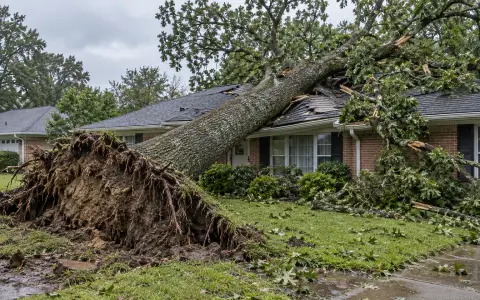 On the house or roof
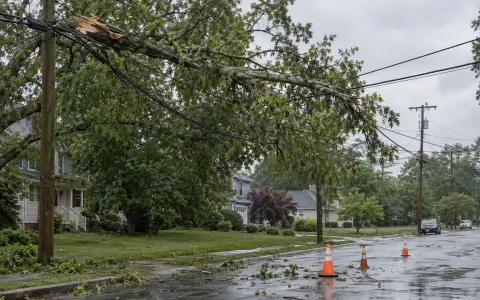 On a power line
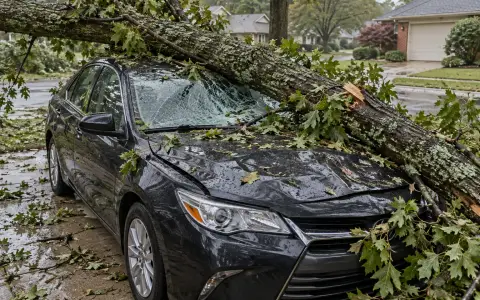 On a car
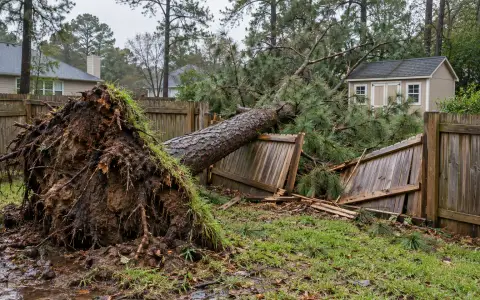 On a fence or shed
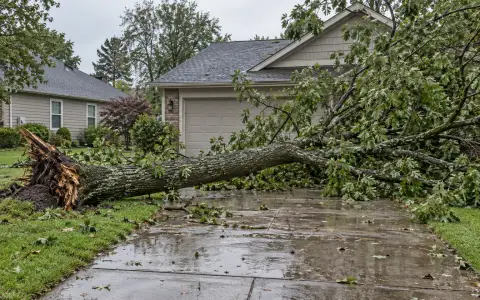 Across the driveway or road
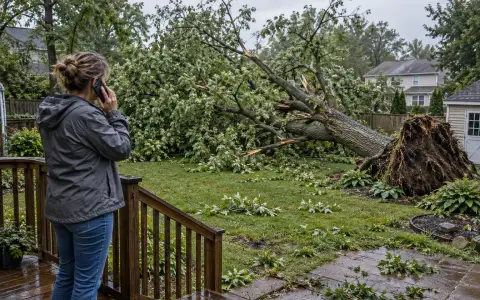
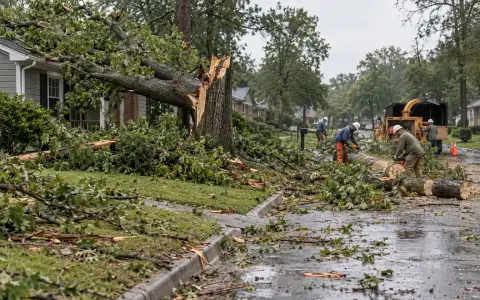 After a storm
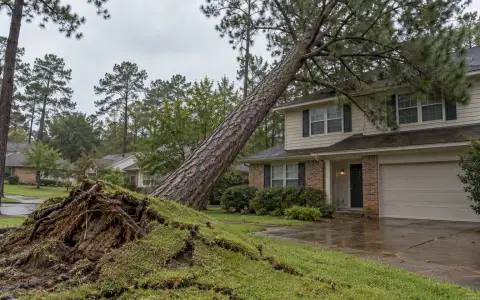 Leaning
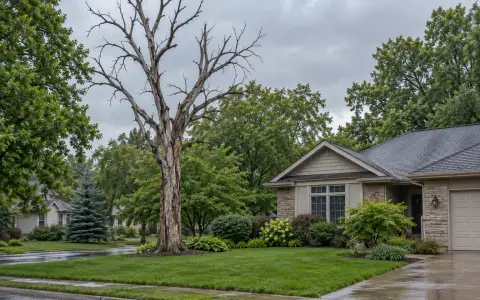 Dead or dying
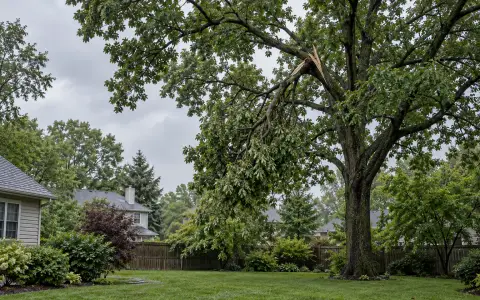 Hanging broken limb
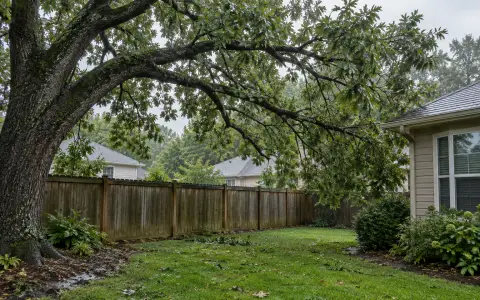 A neighbor’s tree