By state
Tree removal in Arizona
Tree removal in Arizona: storm damage, trees on power lines, leaning and dead trees. Pick your county or town below.
Call (888) 239-7893 free call, 24/7Calling is free and commits you to nothing. The work is priced after someone has seen the tree.
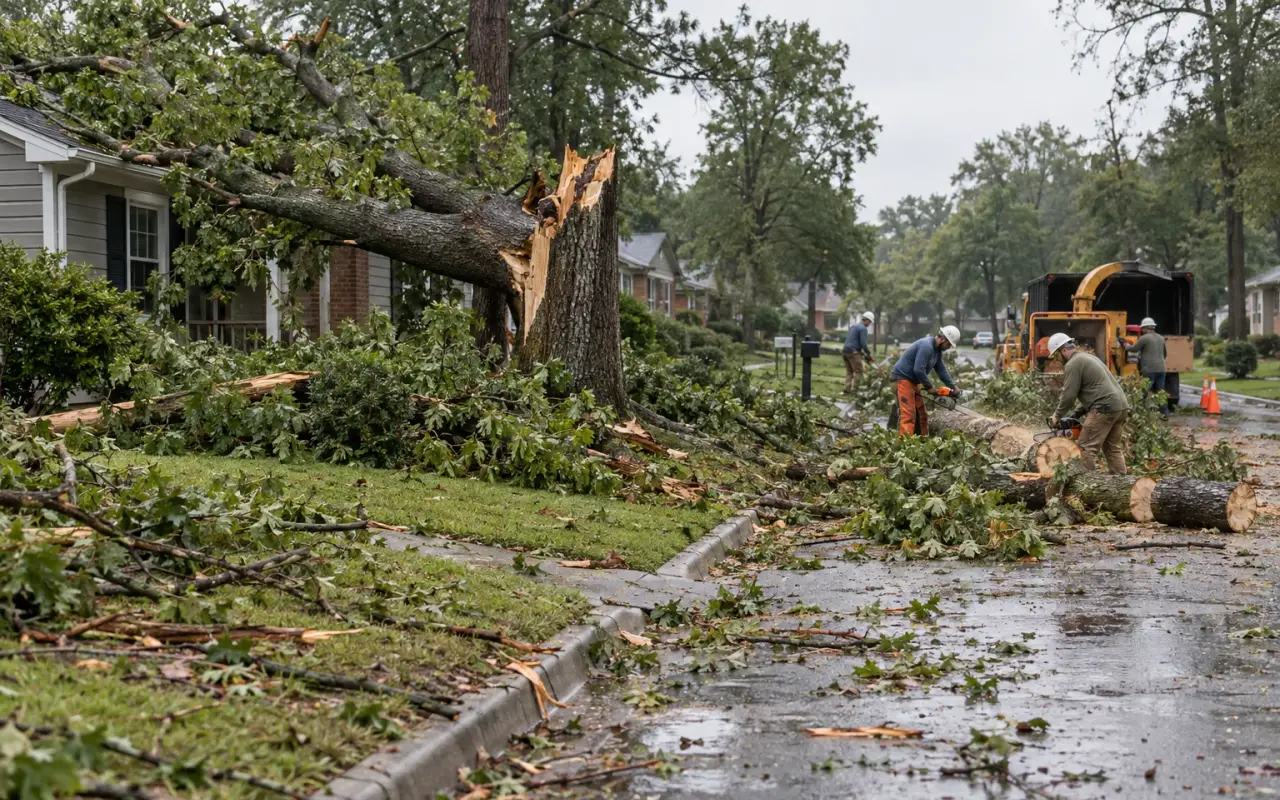
What brings trees down in Arizona
From 2016 through 2025 the National Weather Service logged 1,508 reports of damaging thunderstorm wind across Arizona’s 15 counties, and 628 of them mention trees, limbs or branches.
FEMA’s National Risk Index rates the risk as relatively high or very high from strong wind in 1 of 15 counties.
If a tree is on a power line, the call goes to the electric utility first. EIA lists 39 electric utilities with service territory here; each county page names the ones that serve it.
Sources
Who licenses tree work
We did not find a Arizona state license that applies to tree work as such. That does not settle it for your address: cities and counties may license contractors or businesses. Before work starts, ask any company for a certificate of liability insurance and proof of workers’ compensation coverage.
Insurance questions
Whether a policy pays for a fallen tree, and how much, is in the policy itself, so the first call is to the insurer. The state regulator, the Arizona Department of Insurance and Financial Institutions, takes complaints about how a claim was handled. Insurance and fallen trees
Tree down, or about to come down?
-
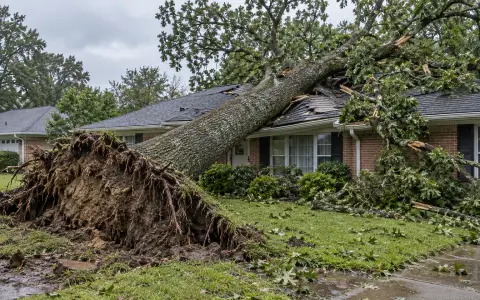 On the house or roofGet people out from under it, photograph everything, call the insurer, then a crew.
 -
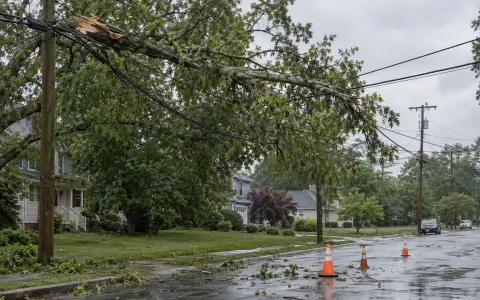 On a power lineThe utility comes first. Stay away and treat the line as live.
 -
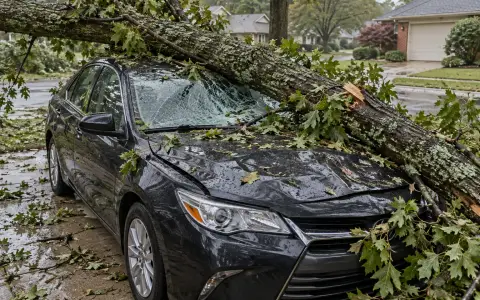 On a carPhotograph it where it lies. The car claim goes to the auto policy.
 -
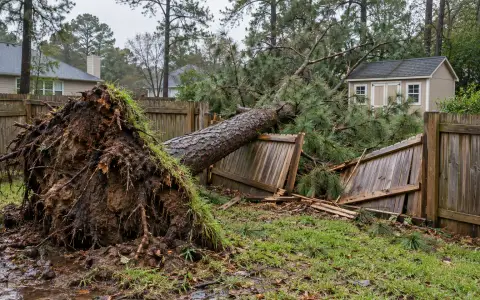 On a fence or shedDamage to a fence or shed is often covered differently from the house.
 -
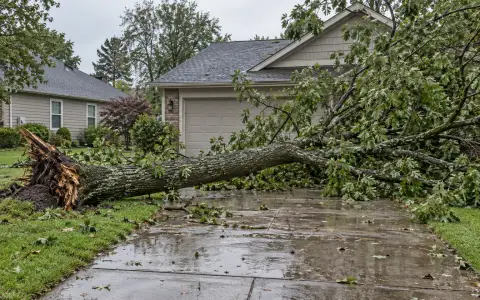 Across the driveway or roadOn the street it is the city’s call. In the driveway, check the policy first.
 -
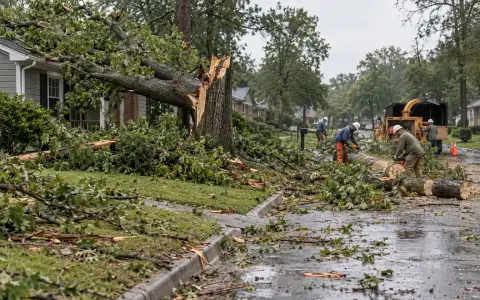 After a stormHanging limbs, split trunks, trees on houses, and the ones that look fine.
 -
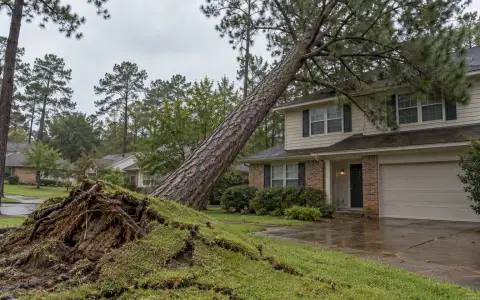 LeaningLifted soil or cracked roots at the base turn a lean into a warning.
 -
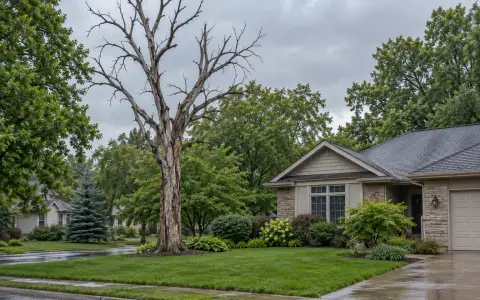 Dead or dyingDead wood is brittle and unpredictable, which is why it often costs more to remove.
 -
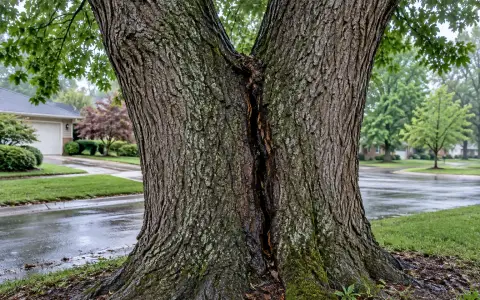 Split or cracked trunkTwo stems from one point, or a crack down the trunk, are common failure points.
 -
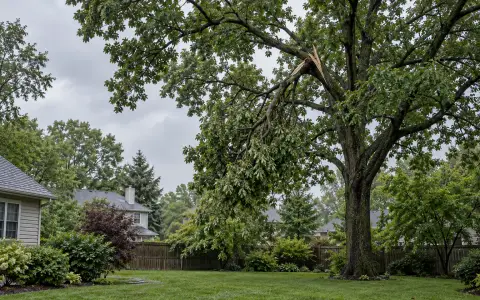 Hanging broken limbIt can fall without warning. Keep people and cars out from under it.
 -
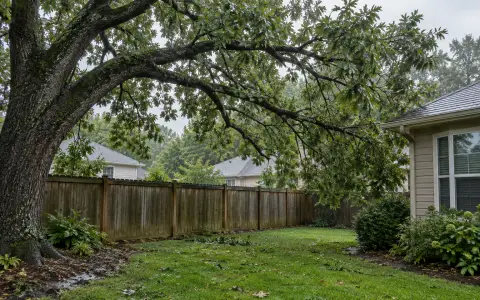 A neighbor’s treeWeather is nobody’s fault. A tree the neighbor was warned about can be.
Largest towns and cities
- Phoenix
- Tucson
- Mesa
- Chandler
- Gilbert
- Glendale
- Scottsdale
- Peoria
- Tempe
- Surprise
- San Tan Valley
- Goodyear
- Buckeye
- Yuma
- Avondale
- Flagstaff
- Casas Adobes
- Queen Creek
- Maricopa
- Lake Havasu City
- Casa Grande
- Marana
- Catalina Foothills
- Prescott Valley
- Oro Valley
- Prescott
- Sierra Vista
- Bullhead City
- Apache Junction
- Sun City
- San Luis
- El Mirage
- Sahuarita
- Kingman
- Fortuna Foothills
- Drexel Heights
- Sun City West
- Florence
- Fountain Hills
- Anthem
Counties
What you will be asked
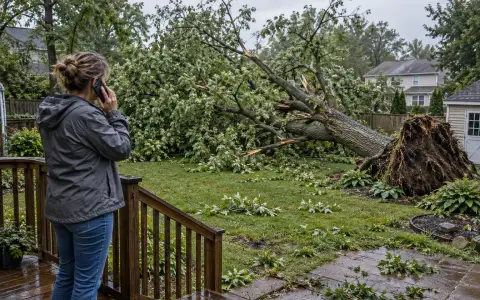
- Where the tree is and what is under it or near it: the house, a power line, a car, a fence, the street.
- Whether it is standing, leaning, split or already down, and since when.
- Roughly how tall it is and how thick the trunk is at chest height. A guess is fine.
- Whether a truck can get close, or the tree is in a back yard behind a fence or a narrow gate.
- Whether there is damage your insurer should see, and whether you have called them yet.
- The address, and whether you own the property or rent it.
The line takes: tree removal, emergency removal after a storm, trimming and pruning, lot and land clearing, tree health checks, cabling and bracing, and brush and debris cleanup, for homeowners, renters and businesses. It is not for: jobs, equipment, firewood, tree services looking for work, or a price quoted over the phone without anyone seeing the tree.